

LinkedIn Ads
For more general information on data collection in Redbird, check out: Getting Started With Data Collection
This guide explains how to set up access and collect data from the Linked In platform. If your Linked In account has access to an advertiser account, you can use this collect app to programmatically pull ad reporting using the API.
If you cannot see the Linked In collection app in the left-side panel on the workflow canvas, refer to: Enabling Collection Apps Guide
Creating a Collection
-
Double-click on the node to enter configuration mode
-
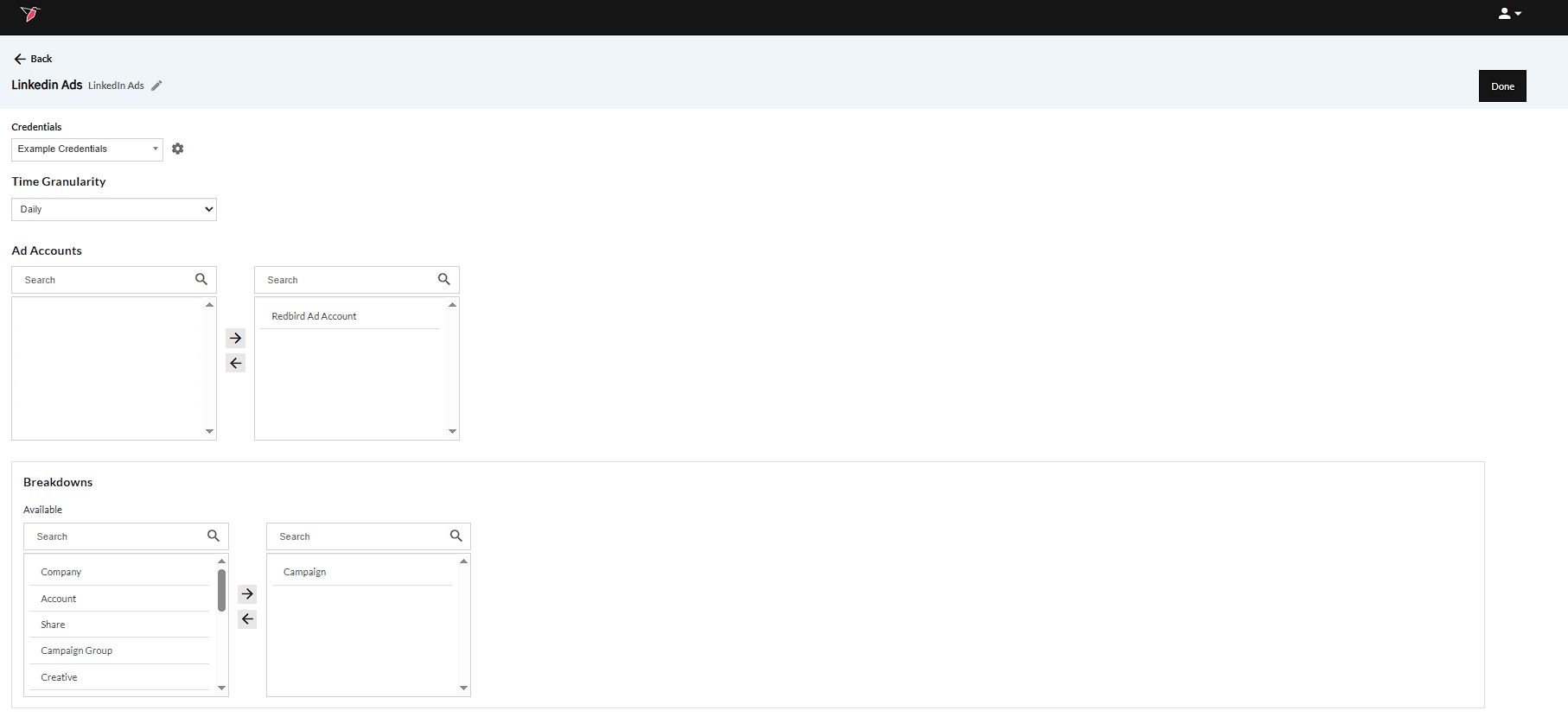
Click the pencil icon next to Configuration Name to name your collection
-
Using the credentials dropdown, select the saved credentials that you'd like to access for your configuration. If you need to add credentials, click on the gear icon.\
-
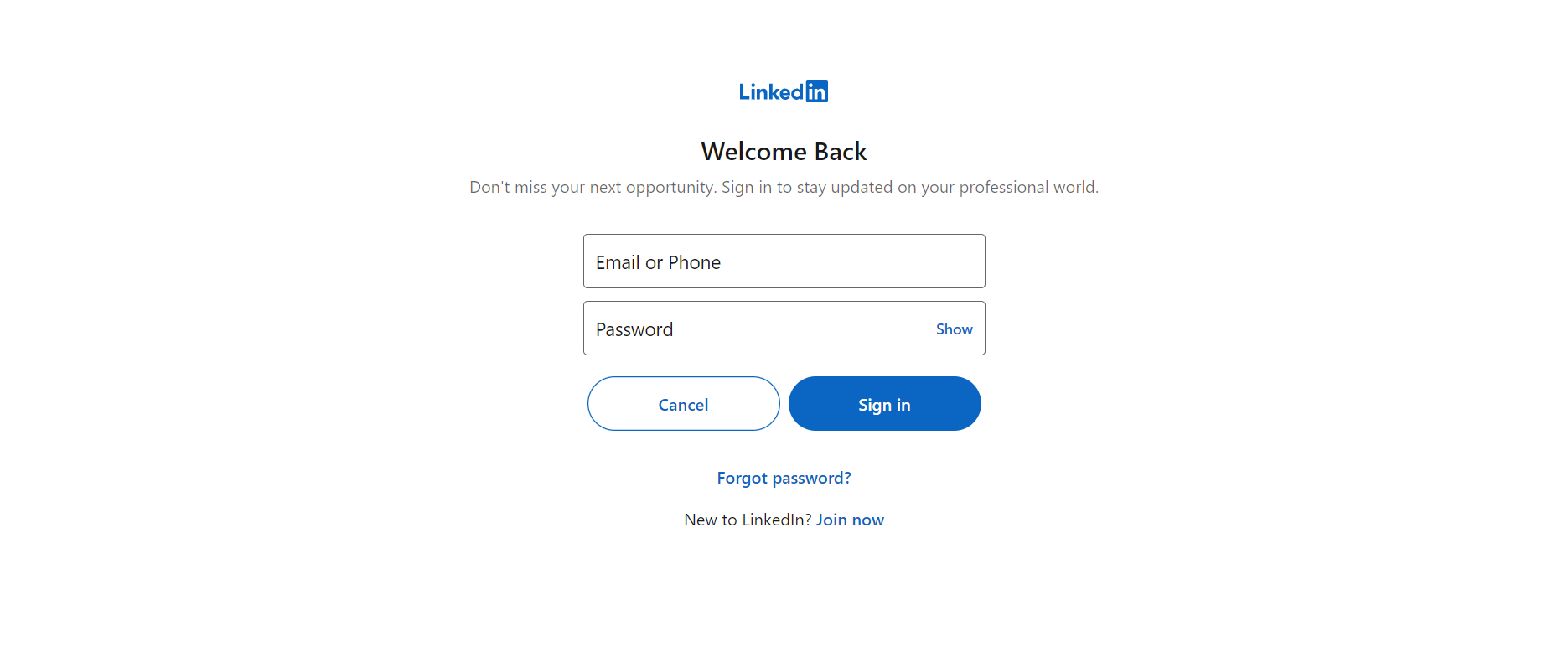
Name your new login and click on the Connect to LinkedIn button. You will be redirected to LinkedIn to log in and confirm what permissions you are granting to Redbird. Once you are done reviewing, click Confirm, and you will be brought back to Redbird.\
-
-
After selecting your credentials in the previous step, the Ad Accounts section will populate with the ad accounts that your account has access to. Using the left/right picker, select the ad accounts that you want to access data for.
-
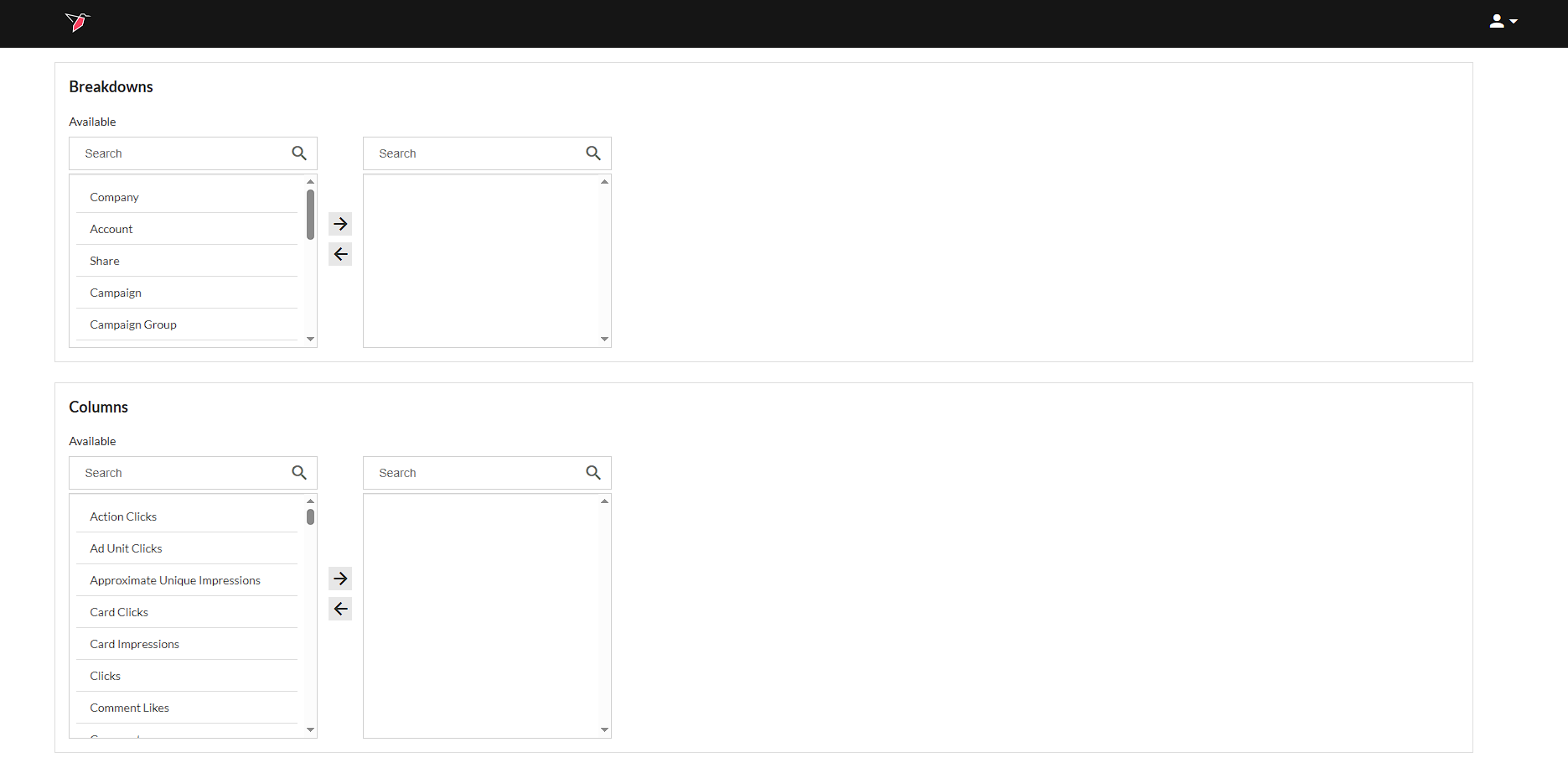
Under Breakdowns and Columns, the available options for the selected view will populate in the Available box. Select the options you need and click the top arrow to move it to the Selected box.\
-
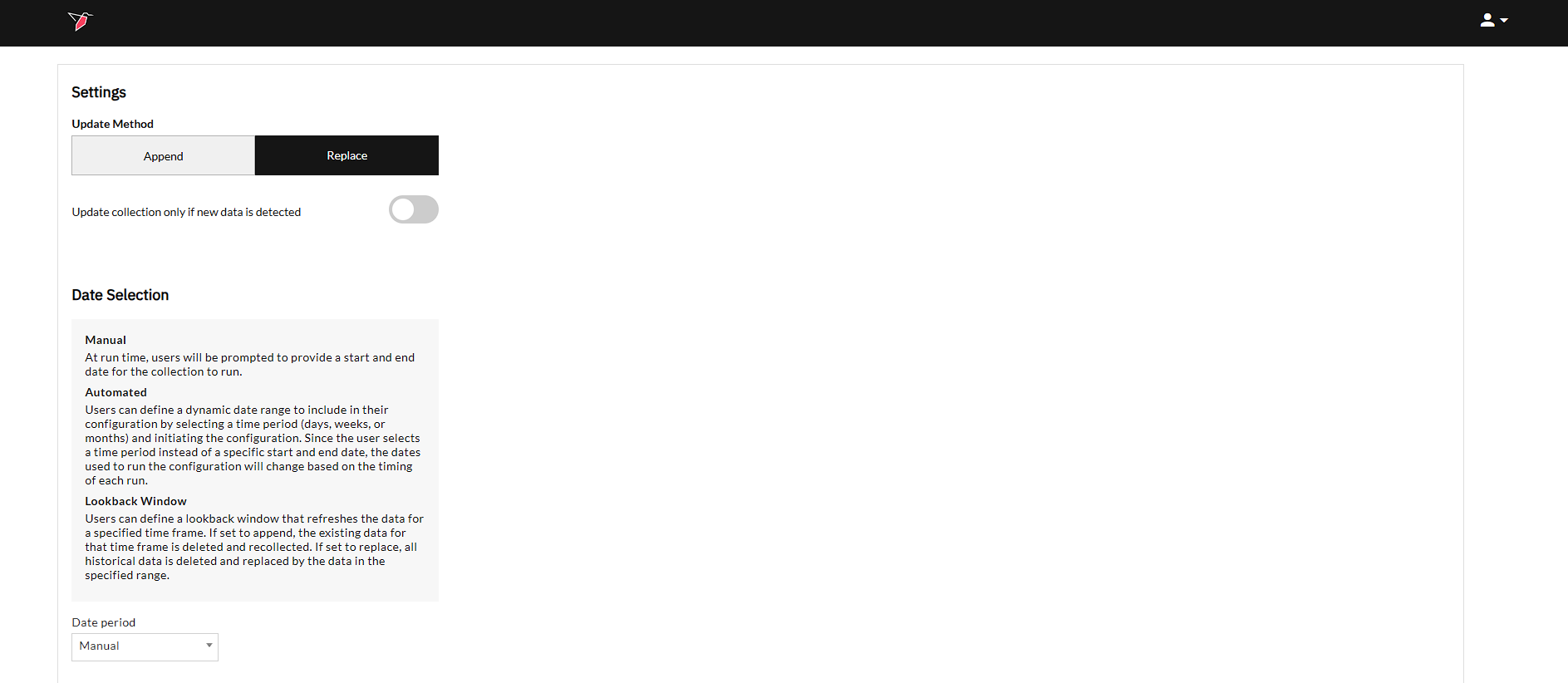
The Update Method allows you to select how you want your data to aggregate when you run future data pulls. Append keeps the historical data and adds the future data pulls below. Replace deletes the historical data and generates the new data in its place.\
-
Date Period allows you to select between a Manual date range or an Automated date range.
- Manual: At run time, users will be prompted to provide a start and end date for the collection to run.
- Automated: Users can define a dynamic date range to include in their configuration by selecting a time period (days, weeks, or months) and initiating the configuration. Since the user selects a time period instead of a specific start and end date, the dates used to run the configuration will change based on the timing of each run.
- Lookback Window: Users can define a lookback window that refreshes the data for a specified time frame. If set to append, the existing data for that time frame is deleted and recollected. If set to replace, all historical data is deleted and replaced by the data in the specified range.
-
Click Done
Running a Collection
- Click on the node.
- In the right-side panel click Run
- If date selection is set to manual, then the workflow will be stopped for you to input dates. Click Review on the node.
- Select the Start date and End date of the period you would like to cover.
- Click Back to Workflow
- Click Continue on the node.
Updated 7 months ago